Dental Implants & Dentures: Candidacy, Cost, Timing & Tooth Replacement
Missing teeth can make ordinary things feel a little different. You may chew more on one side. Certain foods may become harder to eat. And if the missing tooth shows when you smile, you may become more aware of it than you'd like.
There are several ways to replace missing teeth. Dental implants and dentures are two of the options people commonly ask about, but they aren't interchangeable.
An implant is placed into the jaw and can hold a replacement tooth or other restoration. A denture is removable and can replace several teeth or a complete set of teeth in an arch. Some dentures can also be supported by implants.
So which one should you consider? It starts with the condition of your mouth. The number of missing teeth matters, too, as do your jawbone, gums, treatment preferences, and budget.
What are dental implants and dentures?
Dental implants are placed in the jawbone to support a replacement tooth or restoration. Dentures are removable appliances that replace missing teeth.
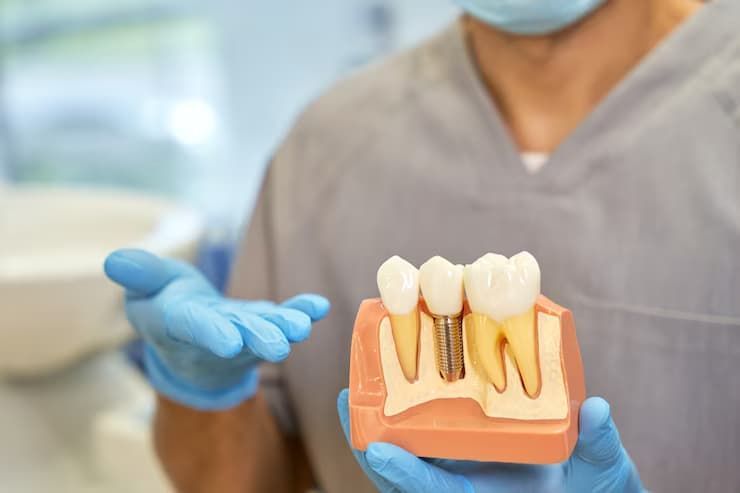
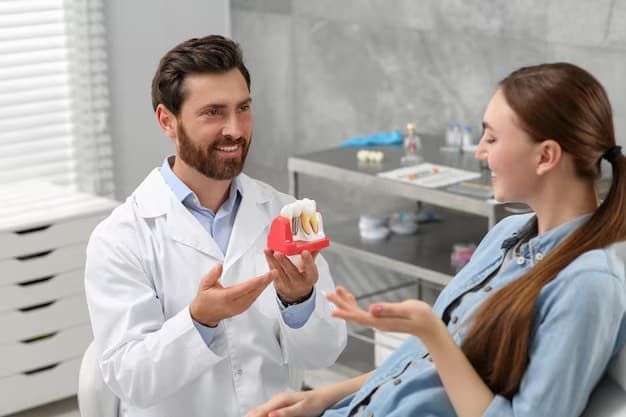
A dental implant uses a small post that is placed into the jawbone. After the area heals, the implant can support a crown, bridge, or denture. Because the implant is secured in the jaw, the replacement isn't simply sitting on top of the gums.
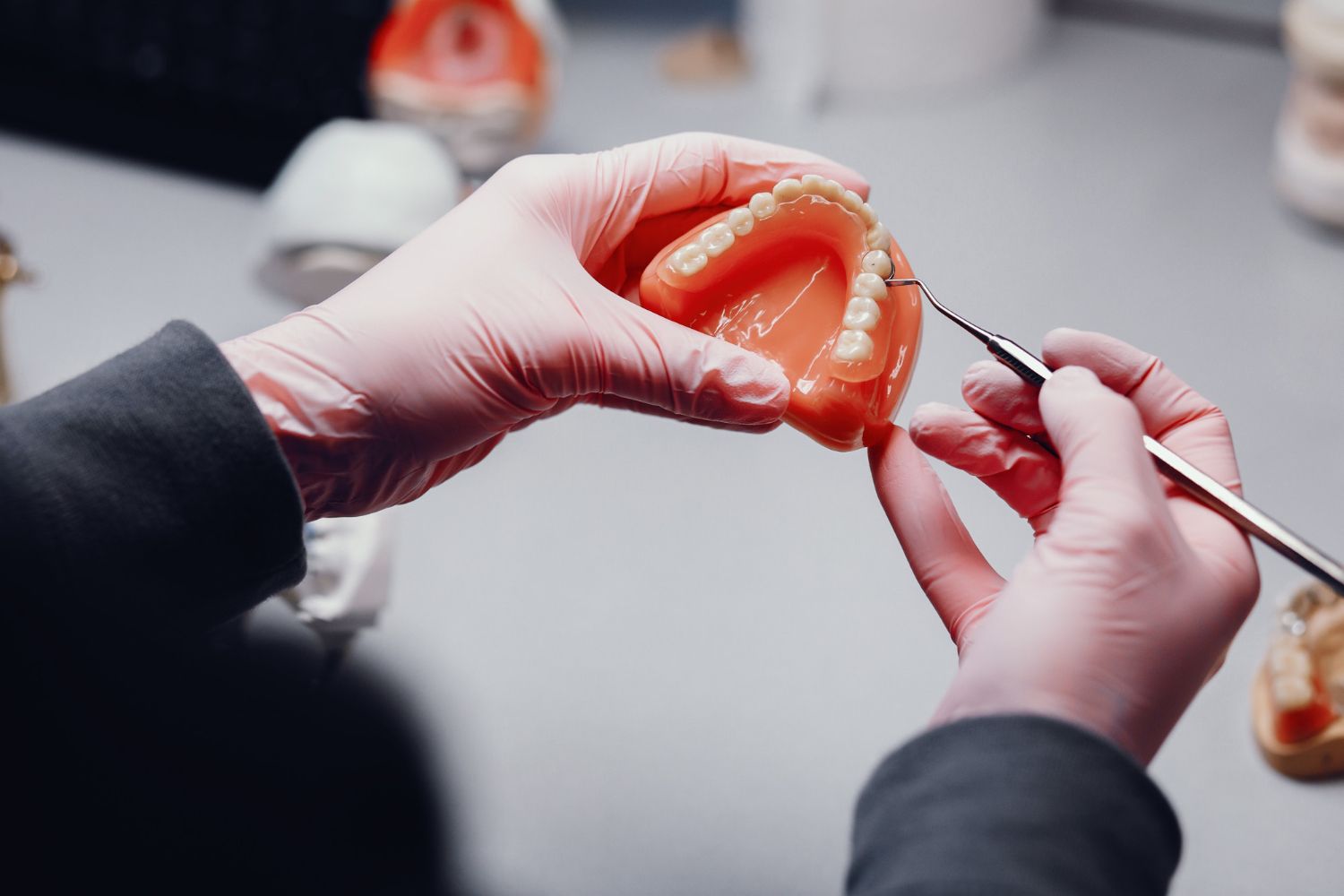
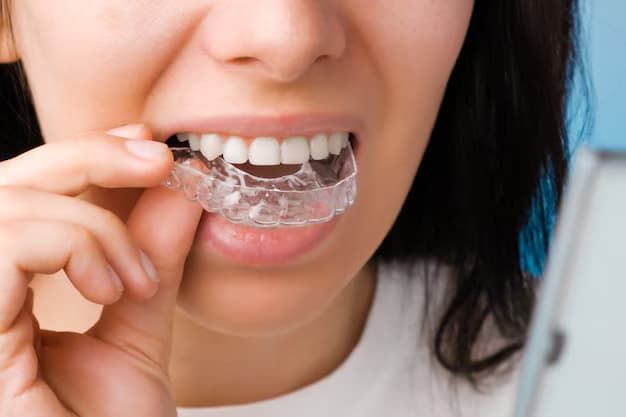
Dentures work another way. A partial denture can fill in several missing teeth while natural teeth remain. A complete denture replaces all the teeth in an upper or lower arch.
There is another option worth knowing about. Implant-supported dentures use implants to help hold the denture in place. For someone who has trouble keeping a conventional denture stable, that may be something to discuss with a dentist.
Who is a good candidate for dental implants?
A good candidate for dental implants generally has healthy gums, enough bone to support the implant, and the ability to heal after treatment.
That's the general idea, but an actual examination is needed to know whether implants are appropriate.
The dentist will look at the area where the tooth is missing, and check the surrounding teeth and gums. The jawbone matters because an implant needs a stable foundation. If there has been bone loss, additional treatment may sometimes be needed before an implant can be placed.
Other things can affect the decision:
- Gum disease may need to be treated first.
- Good oral hygiene is important for long-term care.
- Some medications or health conditions can affect healing.
- The number and location of missing teeth can change the treatment plan.
- Dental X-rays or other imaging may be needed before treatment.
Being told that you need more treatment first doesn't necessarily mean implants are off the table. It simply means the dentist needs to address the condition of the mouth before moving ahead.
How much do dental implants cost in Powder Springs, GA?
The cost of dental implants in Powder Springs, GA varies because every implant treatment plan is a little different.
Replacing one missing tooth isn't the same as replacing several teeth. A single implant and crown may involve different procedures from a treatment plan that uses multiple implants, or an implant-supported denture.
The total cost can be affected by the number of implants, the restoration being used, dental imaging and any treatment needed before implant placement. Bone grafting, when recommended, can also add to the treatment.
This is why a price found online shouldn't be treated as a personal quote. It may not include every part of the treatment.
During a consultation, ask what the estimated cost covers and whether additional procedures are expected. That gives you a much clearer picture.
How long does the dental implant process take?
Dental implant treatment can take several months because the implant needs time to heal and integrate with the jawbone before the final restoration is placed.
The process isn't identical for everyone. Some patients need treatment before the implant can be placed while others can move directly into implant treatment.
Usually, the process starts with an examination and treatment planning. The dentist may use imaging to examine the jawbone, and the area around the missing tooth.
The implant is then placed into the jawbone. After that comes the healing period. Once the implant has healed sufficiently, the final restoration can be attached.
It can feel like a long process when you're waiting to replace a missing tooth. Still, the healing stage isn't something to rush. The implant needs time to become stable before it is used to support the final restoration.
How can I choose between dentures and dental implants?
The choice between dentures and dental implants depends on your oral health the number of missing teeth, available bone, treatment goals and budget.
A removable denture may be a reasonable option when several teeth or an entire arch need to be replaced. It may also be considered when implants aren't appropriate.
An implant may make sense for someone who wants a fixed restoration and has the bone and gum health needed for treatment. Implants can also be used to support certain dentures.
And there's no rule saying the choice has to be one or the other. Some patients may benefit from an implant-supported denture.
The best place to start is a dental examination. Once the dentist knows what's happening in your mouth, the options become much easier to compare.
What types of dentures are available?
Dentures can replace a few missing teeth or an entire arch, depending on the type used.
- Partial dentures: These replace several missing teeth while some natural teeth remain.
- Complete dentures: These replace all teeth in the upper or lower arch.
- Immediate dentures: These may be placed soon after teeth are removed.
- Conventional dentures: These are generally fitted after the mouth has healed.
- Implant-supported dentures: These use dental implants to provide additional support.
The type you need will depend on how many teeth are missing and what's happening with the remaining teeth and gum tissue.
What is the difference between immediate and conventional dentures?
Immediate dentures are placed soon after tooth removal. Conventional dentures are generally fitted after the mouth has had time to heal.
Immediate dentures can be helpful when you don't want to be without replacement teeth while your mouth heals. They are made before or around the time of tooth removal, and can be placed soon afterward.
There's something to keep in mind, though. The gums and jaw change as healing takes place. Because of that, an immediate denture may need adjustments as the mouth changes.
Conventional dentures are made after healing has progressed. The dentist can then work with the shape of the healed tissues when fitting the denture.
Neither approach is automatically right for everyone. If an extraction is planned, ask about both options before treatment.
What happens during a dental implant consultation?
A dental implant consultation is an opportunity to examine the missing-tooth area and decide whether implant treatment is appropriate.
The dentist may examine your gums, remaining teeth, and jaw. Dental X-rays or other imaging may also be used to get a better look at the bone.
You may also discuss:
- Where teeth are missing
- Existing crowns, bridges, or other dental work
- The condition of the jawbone
- Gum health
- Your oral hygiene routine
- Medical history and medications
- Possible tooth-replacement options
- The expected treatment timeline
Sometimes the next step is obvious. Sometimes another dental problem needs attention first. Either way, the consultation gives you a clearer idea of what comes next.
Where can I find dental implants in Powder Springs, GA?
Patients looking for dental implants in Powder Springs, GA can start with a consultation at a local dental practice that provides implant treatment.
At Johnson Family Dentistry, we provide information about dental implants for patients considering tooth replacement.
A consultation is more useful than trying to decide from a treatment description alone. Your dentist needs to examine the missing-tooth area, gums, remaining teeth, and jawbone before recommending a specific approach.
Are dental implants better than dentures?
Dental implants aren't automatically the right choice for every patient, and dentures aren't either.
Implants can provide a fixed foundation for a crown, bridge, or certain dentures. Traditional dentures offer a removable way to replace several teeth or a complete arch.
The decision may come down to things such as bone condition, oral health, treatment time, cost, and whether you want a removable or fixed option.
Sometimes an implant-supported denture is worth considering too. It's one reason a consultation can be more helpful than trying to choose between two options based on a simple comparison.
How do you care for dental implants and dentures?
Both dental implants and dentures need regular cleaning and professional dental care.
Dental implants don't mean you can forget about daily oral hygiene. The teeth and restoration still need to be cleaned, including the areas around the implant.
Dentures need daily cleaning as well. Your dentist can explain how to clean and store them and when they should be removed.
Pay attention to changes in fit or comfort. If a denture becomes loose or starts rubbing, it may need to be adjusted. Changes in the gums and jaw can affect the fit over time.
Frequently asked questions
Can dental implants replace multiple missing teeth?
Yes. Implants can be used to replace individual teeth and can also support a bridge or implant-supported denture when several teeth are missing. The number and position of implants will depend on the patient's mouth and available bone.
Are dentures comfortable?
A well-fitted denture can be comfortable, although getting used to a new appliance can take some time. The fit may change later as the gums and jaw change. If the denture becomes uncomfortable or loose, it should be checked.
Can you get dental implants after wearing dentures?
Sometimes, yes. Wearing dentures doesn't automatically prevent future implant treatment. The dentist will need to examine the gums and jawbone and determine whether there is enough support for implants.
How long do dentures last?
There isn't one exact lifespan for every denture. Daily wear, care, materials, and changes in the mouth all play a part. A denture may eventually need an adjustment, relining, or replacement if the fit changes.
Do dental implants require special care?
Dental implants still need routine oral hygiene. Brush the teeth and restoration as directed, clean around the implant, and keep regular dental appointments so the implant and surrounding tissues can be checked.